Tag Archives: travel

The Perfect Christmas Gift! A Book!

3 Dec
Download to your phone, tablet, laptop on Amazon.com, Amazon.com.mx; Barnes and Noble, bn.com; Kobo.com (now includes sony Readers) and on Google Play. Search William J. Conaway.

Download to your phone, tablet, laptop on Amazon.com, Amazon.com.mx; Barnes and Noble, bn.com; Kobo.com (now includes sony Readers) and on Google Play. Search William J. Conaway.

The Perfect Christmas Gift! A Book!
Print books available in San Miguel at “La Deriva” bookstore in the “Fabrica La Aurora”.

Digital books: Download to your phone, tablet, laptop onAmazon.com,Amazon.com.mx; Barnes and Noble.com; Kobo.com (now includes sony Readers) and on Google Play. Search William J. Conaway.

The Perfect Christmas Gift! A Book!

2 Dec
Download to your phone, tablet, laptop on Amazon.com, Amazon.com.mx; Barnes and Noble, bn.com; Kobo.com (now includes sony Readers) and on Google Play. Search William J. Conaway.

Download to your phone, tablet, laptop on Amazon.com, Amazon.com.mx; Barnes and Noble, bn.com; Kobo.com (now includes sony Readers) and on Google Play. Search William J. Conaway.

The Perfect Christmas Gift! A Book!
Print books available in San Miguel at “La Deriva” bookstore in the “Fabrica La Aurora”.

Digital books: Download to your phone, tablet, laptop onAmazon.com,Amazon.com.mx; Barnes and Noble.com; Kobo.com (now includes sony Readers) and on Google Play. Search William J. Conaway.

The Perfect Christmas Gift! A Book!

26 Nov
Download to your phone, tablet, laptop on Amazon.com, Amazon.com.mx; Barnes and Noble.com; Kobo.com (now includes sony Readers) and on Google Play. Search William J. Conaway.

Download to your phone, tablet, laptop on Amazon.com, Amazon.com.mx; Barnes and Noble.com; Kobo.com (now includes sony Readers) and on Google Play. Search William J. Conaway.

The Perfect Christmas Gift! A Book!
Print books available in San Miguel at “La Deriva” bookstore in the “Fabrica La Aurora”.

Digital books: Download to your phone, tablet, laptop on Amazon.com,Amazon.com.mx; Barnes and Noble.com; Kobo.com (now includes sony Readers) and on Google Play. Search William J. Conaway.

The Perfect Christmas Gift! A Book!

25 Nov
Download to your phone, tablet, laptop on  Barnes and Noble.com;  Search William J. Conaway.

Download to your phone, tablet, laptop on Barnes and Noble.com; Search William J. Conaway.

The Perfect Christmas Gift! A Book!
Print books available in San Miguel at “La Deriva” bookstore in the “Fabrica La Aurora”.

Digital books: Download to your phone, tablet, laptop on Amazon.com, Amazon.com.mx; Barnes and Noble.com; Kobo.com (now includes sony Readers) and on Google Play. Search William J. Conaway.

The Perfect Christmas Gift! A Book!

24 Nov
Download to your phone, tablet, laptop on Amazon.com, Amazon.com.mx; Barnes and Noble.com; Kobo.com (now includes sony Readers) and on Google Play. Search William J. Conaway.

Download to your phone, tablet, laptop on Amazon.com, Amazon.com.mx; Barnes and Noble.com; Kobo.com (now includes sony Readers) and on Google Play. Search William J. Conaway.

The Perfect Christmas Gift! A Book!

Print books available in San Miguel at “La Deriva” bookstore in the “Fabrica La Aurora”.
Digital books: Download to your phone, tablet, laptop on Amazon.com, Amazon.com.mx; Barnes and Noble.com; Kobo.com (now includes sony Readers) and on Google Play. Search William J. Conaway.

Jaral de Berrio

28 Aug
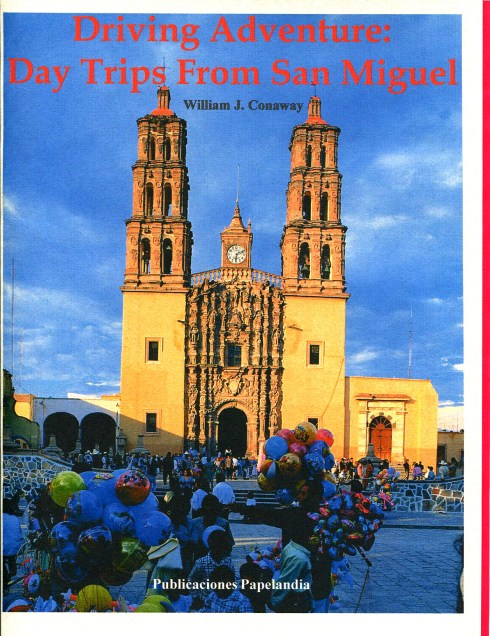
"Driving Adventures: Day Trips From San Miguel" Download Your copy on Amazon.com; Barnes and Noble.com; Kobo.com; and on Google Play. Search William J. Conaway.

“Driving Adventures: Day Trips From San Miguel” Download Your copy on Amazon.com; Barnes and Noble.com; Kobo.com; and on Google Play. Search William J. Conaway.

Day Trips From San Miguel – A 56 page coffee table style guidebook to easy one-day trips with historic and full-color pictures. Visit Acambaro, Guanajuato’s oldest city; Dolores Hidalgo, the Fountain of the Independence movement, La Luz, Guanajuato’s Other Ghost Town; Cerro de San Pedro, San Luis Potosí’s Ghost Town, and Jaral de Berrio, the ruins of an historic Hacienda. DA – 102 – $16.95 Plus $7.95 International Shipping & Handling. Order by email: wjconaway@yahoo.com, or download from Amazon.com Barnes and Noble.com; Kobo.com; or Google Play for a considerable discount.

San Luis Potosí – Capital

5 Aug

"Walking Tours of San Luis Potosí" Download Your copy on Amazon.com; Barnes and Noble.com; Kobo.com; and on Google Play. Search William J. Conaway.

“Walking Tours of San Luis Potosí” Download Your copy on Amazon.com; Barnes and Noble.com; Kobo.com; and on Google Play. Search William J. Conaway.

Walking Tours of San Luis Potosí – A 30 page book of the History, and Step-by-Step instructions for touring this 460+ year old Spanish Colonial city. The booklet has lots of full color pictures, and is suitable for saving as a souvenir. WT-108 – $14.50 Plus $6.95 Intnational Shipping and Handling. Order by email: wjconaway@yahoo.com, or download from Amazon.com, Barnes and Noble.com for a considerable discount.

A Gringo Guide to Living in San Miguel: Its Culture and Customs

4 Apr
Download Your copy on Amazon.com; Barnes and Noble.com; Kobo.com; and soon on Google Play. Search William J. Conaway.

Download Your copy on Amazon.com; Barnes and Noble.com; Kobo.com; and soon on Google Play. Search William J. Conaway.

A Gringo Guide to Living in San Miguel de Allende – A complete 150 page, perfect bound book a guide, and advice for living and enjoying San Miguel de Allende as a resident or a visitor. A fun filled, Cartoon illustrated day-to-day guide with stories chronicalling the authors «Early Years» in San Miguel. Even long-term residents are guaranteed to find information they never knew before, supplied by a 50+ year Bilingual/Bicultural American resident of San Miguel. Also available in print form at the Biblioteca gift shop or Garrison and Garrison and La Deriva bookstore.

Third Excerpt – A Gringo Guide to Mexican History

27 Mar

Download "A Gringo Guide to Mexican History," from Amazon.com; Barnes and Noble.com; or Kobo.com. Search William J. Conaway.

Download “A Gringo Guide to Mexican History,” from Amazon.com; Barnes and Noble.com; or Kobo.com. Search William J. Conaway.

The third Excerpt from my, “Gringo Guide to Mexican History”.

LIFE IN THE STREETS AND PLAZAS OF COLONIAL MEXICO
During the 16th and 17th centuries little was known about the spread of disease and the need for sanitation. The streets were open sewers full of garbage, discarded clothes, dead dogs and cats, broken crockery, and any other disgusting thing that came to hand, all thrown down from the windows of the houses on either side. The masters of the houses lived on the upper floors. The first floor was for animals and servants!

It wasn’t until the 18th century that they began to illuminate the streets and plazas at night. When forced to leave their homes in the dark, the nobles were preceded by their imported Negro slaves carrying flaming torches. Many a poorer resident, coming home in the dark, found himself drenched with unspeakable filth thrown out of an upper story window. (And they tell me México City had no public illumination until 1970!)

The plazas were open air markets full of pig stys, chicken coops, sheep and goat pens, and cows waiting to be milked. There were slaughter houses with no regard paid to the rotting blood that spilled on the paving stones.
Even though the atmosphere was very pious, the private lives of the city’s citizens were not. Prostitution and every other vice flourished, and consciences were eased with large donations to the Church.

Then in the 18th century the colonial cities changed morally and materially. Filthy canals were filled in, streets were paved, public bathrooms were built, water hydrants were provided for the citizens, streets were named and houses numbered, free schools were instituted, bell-ringing was further limited, and public nudity was abolished.

Streetlights were ordered to be provided by the inhabitants of the houses in their doorways and windows. By the end of the 18th and the beginning of the 19th centuries, city police were providing protection for the citizens. In 1722, the first national newspaper was published, and in 1805, the first daily emerged.

Public libraries were opened and the intellectual life of the great city began in earnest, with conversations and discussions in the first cafes that opened along the boulevards.

A Gringo Guide to Mexican History

25 Mar
Download Your copy Today!

Download Your copy Today!

A second excerpt from my, “A Gringo Guide to Mexican History”.

The Religious Conquest of Mexico
In 1529, Don Juan de Zumárraga, first Bishop and Archbishop of México, wrote in a report to the King:

We are very busy with our continuous and great work in the conversion of the infidels of whom…over a million people have been baptized, five hundred temples of idols have been razed to the ground and over 20,000 images of devils that they adored have been broken to pieces and burned…And…the infidels of this city of México, who in former times had the custom of sacrificing each year over 20,000 human hearts to their idols, now make their offerings to God instead of to the devils…. Many of these children, and others who are older, know how to read, write, sing, and sound the proper pitches for singing…. They watch with extreme care to see where their parents hide their idols, and then they steal them and faithfully bring them to our friars. For doing this, some have been cruelly slain by their own parents, but they live crowned in glory with Christ…. Each one of our monasteries has next to it a house in which children are taught and where there is a school, a dormitory, a dining hall and a chapel for devotion…. Blessed be the Lord for everything….

(You read it, in five short years they had baptized over a million people. The friars had destroyed 500 temples of idols, and 20,000 images of idols!)
Also among the missionaries first chores was to study the native languages and dialects and to compile vocabulary lists and other linguistic guides, and finally, dictionaries to aid them in teaching the natives the elements of faith, preparing them for baptism. And they baptized hundreds of thousands of the Indians they encountered during their lifetimes. They taught the people how to live better, helped them learn trades, and improved their artistic abilities.

These friars walked about barefoot with only their heavy woolen habits to cover them. They slept on the ground and begged for food in the Indian markets, sometimes even eating tortillas with whatever fruits and berries they could gather. The robes they brought with them from Spain were the only clothes they possessed and were soon worn out. (Clothing was a big problem for everyone in those days.) A legend persists to this day:

Don Martín, an Indian Cacique, Chieftan, of the village of Guacachula, seeing the disgraceful condition of his friars robes, sent several skilled artisans out to work for a newly arrived Spaniard who was weaving cloth on his imported looms and selling all he could produce. These spies were able to learn the trade in a short time and carefully took measurements of all the parts of the looms they worked on. Returning to the village they built their own looms and were soon producing sackcloth for the friars as well as for themselves.

The obvious difference between the humble friars and the conquistadores who built themselves fine homes and gorged themselves with all the best, was all too obvious to the poor Indians.